Tuesday, 17 June 2014

Jewelers to Invest in Botswana

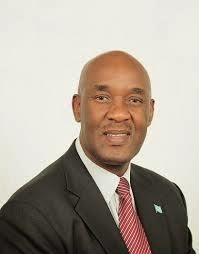
Botswana’s Minister of Minerals, Energy and Water Resources, Onkokame Kitso Mokaila, described the country's  mission to diversify to the United State "to lure jewelers to invest in Botswana".

www.freestudyabroadguide.com/
Free Study Abroad Guide
“We want people to go as far down the value chain as possible and that’s why we want to  start a new conversation about how can we help bring jewelers to Botswana,” Mokaila said at the JCK Las Vegas show. “How can we have a relationship that can be meaningful to them? We will listen and do what is necessary to ensure that we diversify our economy.” For Botswana, economic diversification is vital as the country remains highly reliant upon the diamond industry and, more specifically, diamond mining. Through its partnerships with De Beers, royalties and taxes, approximately 80% of royalties from diamonds mined in Botswana go to the government. Mokaila reports that about 30% of the country’s budget and about 80% of its export revenue comes from diamonds.

Still, the diamond mining has its limits, even if Mokaila assured that the country’s diamond mining resource will extend to around 2050, well beyond the initial 2030 projection. Debswana, which is an equal partnership between De Beers and the Botswana government, has the bulk of production yielding about 22 million carats a year from its four mines – Orapa, Letlhakane, Damtshaa and Jwaneng. The Ghaghoo development, the country’s fifth mine, is being readied for production by Gem Diamonds later this year.

Therefore, while the country’s diamond resource is celebrated, the government is also acutely aware of the need to diversify. The country has come a long way to move downstream in a short time.

In past, De Beers shifted its sorting and sales operations from London to Gaborone, and the state-owned Okavango Diamond Company launched its own rough sales. In addition, a number of new diamond manufacturing companies have begun operations, bringing the number of DTC Botswana sightholders to 20. Significantly, a number of auxiliary services such as brokers, banks, shipping companies and grading laboratories have set up shop in Gaborone.

Mokaila sees as bringing jewelers to the country and expanding Okavango’s role. During his trip to the U.S. he visited Tiffany & Co. to understand what is required to be involved in the retail side of the business. “We want to understand what the value proposition is,” he told Martin Rapaport, the chairman of the Rapaport Group, during a video interview. “I know that [jewelers] won’t come for nothing and that they have to stay in business. We don’t expect them to come to Botswana out of charity. It has to be sustainable.”

Similarly, the government is cautious to ensure that Okavango’s operations are sustainable. The company currently has access to 14% of Debswana production – approximately 3 million carats – which it sells via auction. Mokaila stressed that he wants to make Okavango a major competitor on the global market, which he hints might include introducing rough contract sales, polished tenders and gaining access to a greater chunk of Debswana production.

To down the value chain that these bodies are able to drive the industry,  the more the government can reinvest to develop other areas of the economy. Slowly, other sectors are growing, most notably tourism. Mokaila explained that the government’s budget is generally channeled toward developments such as water, electricity and infrastructure projects “to ensure that as more people come to Botswana, they can do good business,” and for recurrent projects to improve education and health services that benefit the local population.

The government’s budget has enabled virtually free education for Botswana’s population of 2 million and many young Botswanans are granted scholarships to study abroad. However, for well-educated population, Mokaila notes that there are not enough jobs. He hopes that establishing jewelry manufacturing and other diamond support industries will create the opportunities in the same way that diamonds did. “I look at myself sitting here. I come from a settlement of about 50 people according to the last census,” he explained. “What chance does anybody from such a settlement have of sitting here as a minister, who has been schooled from start to finish by diamonds? That’s how attached we are to them, and that’s what diamonds mean to Botswana.”

Sunday, 15 June 2014

Information About Freestudyabroadguide.com

Free Study Abroad Guide Site.

Free Study Abroad Guide
The content on this site, including universities, quotes, data and other information, is provided by Free Study Abroad Guide and its third party content providers for your personal information only, and is not intended for trading purposes. Content on this site is not appropriate for the purposes of making a decision to carry out your desire study. Nor does it provide any form of advice amounting to choose the courses, advice, or make any recommendations regarding particular universities.

We do not request personal information in any unsolicited email correspondence with our students. Any correspondence offering course selection advice or unsolicited message asking for student details should be treated as false. Neither its third party content providers shall be liable for any errors.

Although Free Study Abroad Guide makes reasonable efforts to obtain reliable content from third parties, Free Study Abroad Guide does not guarantee the accuracy of or endorse the views or opinions given by any third party content provider. This site may point to other Internet sites that may be of interest to you, however Free Study Abroad Guide does not endorse or take responsibility for the content on such other sites.

ISU Plans for American Students Studying Abroad

Free Study Abroad Guide
Studying abroad is important because our students need to be able to interact with a global work force. ISU has signed onto the Institute of International Education's Generation Study Abroad initiative that calls for doubling the number of American students studying abroad by the end of the decade.

Depending on the program, a semester abroad generally costs from $7,500 to $21,000, including airfare, passport, tuition and other costs, according to the Office of International Studies and Programs. That compares to about $13,200 a semester for the average in-state student, including, tuition, fees, room and board, books and personal expenses, the office reports.

“International experience and intercultural skills are all very important for today's graduate,” The world has changed. We're not an isolated country. We need to relate to others to be globally competitive.” But studying abroad is not just a matter of boosting intellectual skills and being competitive in the job market — it's also about personal growth, said those involved.

Rita Hess of Elk Grove Village, who graduated from ISU in May with a bachelor's degree in Spanish and Italian, said the five months she spent in Grenada, Spain. It made me more compassionate toward others. It opened my eyes to a lot of things I never knew before.  Also, after her international experience, Hess said, “I'm a lot less reserved. I'm a lot less scared to try new things.”

The impact of studying abroad became personal to Bailey after her oldest child, Ky, studied in Morocco. “He came back with such a different perspective,” she said. “It hit home how life-changing it is.” There can be extended stays, such as the the five months Hess was in Spain. She took 18 credit hours of courses taught in Spanish and lived with a local family that included a teenage girl. Other students stay for a semester, taking courses taught in English or the local language. Some take shorter trips of 10 days to a month led by ISU faculty members who might tie the trip to a course.

Bailey described a course offered through the honors program that studied one city, Florence, Italy, in depth, covering areas such as history, culture, geography and economics. Then, 17 students and two instructors spent about 10 days in Florence.

Lorenzo de Medici, an international institute with several campuses in Italy, offers a wide range of courses taught in English that contribute to Italy being among the most popular countries for foreign study. The next most popular locations for ISU students are England and Spain. Among the keys to increasing the number of students studying abroad are getting to them early before they are locked into a sequence of courses in their majors, and having faculty members talk to students about the value of international experience.

A potential area for growth is among male students. About 74% of ISU students who study abroad are females.


Free Study Abroad Guide - Study guides of European universities which offer free Studies facility for foreign students. Like Universities of Austria, Germany and Sweden. And detail of free study abroad programs they offer free universities, free course, free education: www.freestudyabroadguide.com/

Cheap flights for You Booking Page | specialising in cheap airfares, cheap accommodation, packaged holidays, cruises, car hire, visas, insurance. Book your Cheap airline ticket with us:
www.cheap-flight-4u.com/


Sunday, 18 May 2014

Study Abroad Tips and Student's Experience

http://www.cheap-flight-4u.com/USA/
Fly to USA
Know about your study abroad area. Try and read the newspaper and familiarize yourself with the general state of affairs in the country and city you will be visiting. Pick up a travel book, like a Lonely Planet, to get to know the major monuments, transportation, local sites, as well as the good and bad areas of town. Read about Free Study Abroad Guide reviews of your program and other programs in the area, as well as other blogs devoted to the student experience study abroad. Check out for first hand accounts of student expats and their experiences while study abroad. Not only will you be able to converse with the locals better, enhance your own experience with insight into the cultural quirks of your country, but you will be more in the know compared to your other study abroad participants.

There is hard time in your life to travel when you are willing to go the extra mile to save a few bucks and adventurous enough to check out the out of the way towns and festivals. If you are in Europe, head over to Munich for Okterber fest in the fall, check out hiking the Alps in October, before the ski crowds, high prices, and cold move in, go to the Greek Islands in May before the crowds roll in and when the weather is great or Southern Spain in the winter months. Investigate opportunities for cheap travel within your region. Check out www.freestudyabroadguide.com/'s Helpful Links section for links to websites and resources for low cost airline, lodging, package travel, as well as travel blogs. Don't forget that much of the world travels by train and bus, which can be both cost effective and one of the more interesting cultural experiences you will have. There is nothing quite like sitting on a 10 hour bus ride with a family and the family pet pig or catching a taking an overnight train to your destination and bundling up the cost of lodging and transportation all in one.

Take advantage of student discounts if they are available in your study abroad country. Depending on the country you study in, student discounts can save you money at museums, tourist attractions, transportation, shopping outlets, and even the movie theater. Also, many hostels and other businesses have negotiated discounts for holders of the international student card.

Figure out how you will be communicating with your loved ones and friends back in the United States, your new friends and the locals in your new home, as well as the local emergency number. For calling your friends and family in the United States, as well as others with an internet connection, VOIP options, including Skype and Vonage may be a great, cost effective option for you. You may have to invest in a microphone and speakers for your computer, if you don't already have them, but these VOIP options are cheap, reliable, and you can call anywhere, as long as you are by your computer. As far as keeping in touch with your local friends, check into cell phone plans that are available. Some countries do not allow you to sign up for a monthly cell phone plan unless you have a local bank account, but most countries offer pay-as-you-go cell phone plans that can do the job for only slightly more than the cost of a monthly plan. Don't forget to also check out the landline options while you are abroad, for calls made locally and internationally. Sometimes landline rates can be reasonable.

If your idea of comfort food is a peanut butter and jelly sandwich, chances are you should stock up on peanut butter before you leave the US. Most countries have either their own version of some American foods, or nothing at all. You may not realize until you are already abroad, but you will come up with food items you can't live without and that you can't find anywhere abroad.

One thing you will notice after your first month of living abroad are the foreign transaction fees your credit card company charges on all purchases made in another currency as well as the transaction charge for most ATM withdrawals. Although the bank offers no service for these fees, which range from 2 to 3% of the charge, they can add up quickly. So if you are not planning to open up an account at a local bank, check to see if your American bank has any agreements set up with international banks and affiliates, to cut down on this expense. Capital One does not charge foreign transaction fees on credit card purchases, but does on ATM transactions. If your bank does not have any special arrangements with a foreign bank, another idea is to withdraw a large sum of cash each month and go through that as needed. Don't forget that if your debit or credit card is lost or stolen, it can be difficult to replace quickly. Check out this article from the NYTimes Here to read more about credit cards while abroad.

Many who go abroad are happy to spend time with other Americans, party until all hours of the night at different bars and dance clubs, and speak in English for the duration of the trip. However, I encourage you to do something out of your comfort zone, whether it is studying in the local language, living in a homestay with a local family, joining a local club or sports team, volunteering or finding an internship locally, or simply getting off the beaten path when you travel. Not only will you get a better flavor of the cultural nuances and how things work in the country you are living in, but you will be more resilient and gain a different view of the country you are in. Don't forget that when you return to the United States, you and others will be most impressed and have the best memories of how you integrated into new environment.

If you Play a Sport, Get Involved. Although most Americans associate college sports with intense practice and competition schedules, the rest of the world does not think of college sports in that way. At most colleges, there are sports clubs and teams with more casual practice and competition schedules. Not only can you play a sport that you love, but you can meet other students and it is always a great study break. Depending on your skill level, you may also think of giving lessons in your sport, or volunteering your time coaching a youth team or league. If you do plan to play a sport overseas, don't forget to bring your gear, as sports equipment can either be difficult to find or very expensive.

You will always be an American, but it is worth reading up and respecting the history of the country and people you are living with. Take behavioral cues from locals, especially in regards to dressing more conservatively in churches and the local tolerance for public drinking. Know what is an appropriate tip when at a restaurant and for a cab ride.

Studying abroad will provide memories that will last a lifetime, make sure you capture these moments to share with friends and family as well as to reminisce in later years.


Hello lovely lovely friends open this link and get information about Free Study Abroad Guide and Cheap-Flight-4u to all over the world and more more more come on my site:
www.freestudyabroadguide.com/
www.cheap-flight-4u.com/
Sunday, 11 May 2014

Pennsylvania State University - Pennsylvania, (USA)

http://www.freestudyabroadguide.com/
Free Study Abroad Guide
The Pennsylvania State University (commonly referred to as Penn State or PSU) is a public, state-related research university with campuses and facilities throughout Pennsylvania. Founded in 1855, the university has a stated threefold mission of teaching, research, and public service. Its instructional mission includes undergraduate, graduate, professional and continuing education offered through resident instruction and online delivery. Its University Park campus, the flagship campus, lies within the Borough of State College and College Township. The Penn State Dickinson School of Law has facilities located in both Carlisle and State College and the College of Medicine is located in Hershey. Penn State has another 19 commonwealth campuses and 5 special-mission campuses located across the state. Penn State has been labeled one of the "Public Ivies," a publicly funded university considered as providing a quality of education comparable to those of the Ivy League.

Annual enrollment at the University Park campus totals more than 45,000 graduate and undergraduate students, making it one of the largest universities in the United States. It has the world's largest dues-paying alumni association. The university's total enrollment in 2009–10 was approximately 94,300 across its 24 campuses and online through its World Campus.

The university offers more than 160 majors among all its campuses and administers $2.03 billion (as of June 30, 2013) in endowment and similar funds. The university's research expenditures exceeded $753 million for the 2009 fiscal year and was ranked 9th among U.S. universities in research income by the National Science Foundation.

Annually, the university hosts the Penn State IFC/Panhellenic Dance Marathon (THON), which is the world's largest student-run philanthropy. This event is held in the Bryce Jordan Center on the University Park campus. In 2014, THON raised a program record of $13.3 million. The university's athletics teams compete in Division I of the NCAA and are collectively known as the Penn State Nittany Lions. They compete in the Big Ten Conference for most sports.

History
The school was founded as a degree-granting institution on February 22, 1855, by act P.L. 46, No. 50 of the General Assembly of the Commonwealth of Pennsylvania as the Farmers' High School of Pennsylvania. Centre County, Pennsylvania, became the home of the new school when James Irvin of Bellefonte, Pennsylvania, donated 200 acres (0.8 km2) of land – the first of 10,101 acres (41 km2) the school would eventually acquire. In 1862, the school's name was changed to the Agricultural College of Pennsylvania, and with the passage of the Morrill Land-Grant Acts, Pennsylvania selected the school in 1863 to be the state's sole land-grant college. In the following years, enrollment fell as the school tried to balance purely agricultural studies with a more classic education, falling to 64 undergraduates in 1875, a year after the school's name changed once again to the Pennsylvania State College.

George W. Atherton became president of the school in 1882, and broadened the curriculum. Shortly after he introduced engineering studies, Penn State became one of the ten largest engineering schools in the nation. Atherton also expanded the liberal arts and agriculture programs, for which the school began receiving regular appropriations from the state in 1887. A major road in State College has been named in Atherton's honor. Additionally, Penn State's Atherton Hall, a well-furnished and centrally located residence hall, is named not after George Atherton himself, but after his wife, Frances Washburn Atherton. His grave is in front of Schwab Auditorium near Old Main, marked by an engraved marble block in front of his statue.

In the years that followed, Penn State grew significantly, becoming the state's largest grantor of baccalaureate degrees and reaching an enrollment of 5,000 in 1936. Around that time, a system of commonwealth campuses was started by President Ralph Dorn Hetzel to provide an alternative for Depression-era students who were economically unable to leave home to attend college.

In 1953, President Milton S. Eisenhower, brother of then-U.S. President Dwight D. Eisenhower, sought and won permission to elevate the school to university status as The Pennsylvania State University. Under his successor Eric A. Walker (1956–1970), the university acquired hundreds of acres of surrounding land, and enrollment nearly tripled. In addition, in 1967, the Penn State Milton S. Hershey Medical Center, a college of medicine and hospital, was established in Hershey with a $50 million gift from the Hershey Trust Company.

In the 1970s, the university became a state-related institution. As such, it now belongs to the Commonwealth System of Higher Education, and is now part of the fully public Pennsylvania State System of Higher Education. In 1975, the lyrics in Penn State's alma mater song were revised to be gender-neutral in honor of International Women's Year; the revised lyrics were taken from the posthumously-published autobiography of the writer of the original lyrics, Fred Lewis Pattee, and Professor Patricia Farrell acted as a spokesperson for those who wanted the change.

In recent years, the university's role as a leader in education in Pennsylvania has become very well-defined. In 1989, the Pennsylvania College of Technology in Williamsport joined ranks with the university, and in 2000, so did the Dickinson School of Law. The university is now the largest in Pennsylvania, and in 2003, it was credited with having the second-largest impact on the state economy of any organization, generating an economic effect of over $17 billion on a budget of $2.5 billion. To offset the lack of funding due to the limited growth in state appropriations to Penn State, the university has concentrated its efforts on philanthropy (2003 marked the end of the Grand Destiny campaign—a seven-year effort that raised over $1.3 billion)

In 2011, the university and its football team garnered major international media attention and criticism due to a sex abuse scandal in which university officials were alleged to have covered up incidents of child sexual abuse by former football team defensive coordinator Jerry Sandusky. Two university administrators, athletic director Timothy Curley and Gary Schultz, Senior Vice President for Finance and Business, were indicted for perjury. Sandusky was indicted and in June 2012 convicted on 45 counts for the abuse. Coach Joe Paterno was fired, and school president Graham B. Spanier was forced to resign by the Board of Trustees late in the evening of November 9, 2011. In response to Paterno's ouster, thousands gathered outside in State College on the night of the Trustees meeting and some caused damage to property.

Former FBI director Louis Freeh headed an independent investigation on the university's handling of the incidents and in July 2012 released his findings, which concluded that Paterno, along with Spanier, Curley and Schultz "conceal[ed] Sandusky's activities from the Board of Trustees, the University community and authorities" and "failed to protect against a child sexual predator harming children for over a decade." On July 23, 2012 the NCAA penalized Penn State football with a $60 million fine, a ban from bowl games and post-season play for 4 years, a reduction in scholarships from 25 to 15 per year for four years, the vacating of all wins from 1998 to 2011, and a 5-year probationary period. Following Freeh's report, former U.S. Attorney General Dick Thornburgh headed a Paterno family funded investigation that disagreed with Freeh's findings. Thornburgh's report included the help of former FBI profiler Jim Clemente, and senior lawyer Wick Sollers, but Freeh called the Thornburg report "self-serving" and stood by his report's conclusions. Sandusky maintained his innocence.

Campuses

University Park
The largest of the university's 24 campuses, University Park is almost entirely within the boundaries of State College borough, a site chosen to be near the geographic center of the state. With an undergraduate acceptance rate of 51 percent, it is the most selective campus in the Penn State system, due primarily to the fact that students select University Park as their first-choice campus at a far greater rate than the university's other undergraduate campuses. During the fall 2010 semester, 38,594 undergraduate students and 6,223 graduate students were enrolled at University Park. Of those, 45.3 percent were female and 30.6 percent were not Pennsylvania residents.

Transportation Access
The main University Park campus is centrally located at the junction of Interstate 99 and U.S. Route 322, and is due south of Interstate 80. Before the arrival of the Interstates the University was a short distance from a Lock Haven - Altoona branch line of the Pennsylvania Railroad. The last run of long distance trains from Buffalo or Harrisburg through Lock Haven was in 1971. Today, the nearest passenger rail access is in Lewistown 31 miles to the southeast. The University Park Airport, serving four regional airlines, is near University Park.

Commonwealth Campuses
In addition to the University Park campus, 19 campus locations throughout the state offer enrollment for undergraduate students. Over 60 percent of Penn State first-year students begin their education at a location other than University Park. Each of these commonwealth campuses offer a unique set of degree programs based on the student demographics. Any student in good academic standing is guaranteed a spot at University Park to finish his or her degree if required or desired, known as "change of campus" or more accurately "the 2+2 program"; where a Penn State student may start at any Penn State campus, including University Park, for 2 years and finish at any Penn State the final 2 years.

Special-mission Campuses
The Dickinson School of Law was founded in 1834 and is the oldest law school in Pennsylvania. It merged with Penn State in 2000. Students now have the choice of studying in either Carlisle or University Park, with classes teleconferenced between the two locations using high-tech audiovisual equipment. The school is ranked among the top 100 law schools nationally. It has produced a number of governors, members of congress, and judges. A number of attorneys comprise the faculty and lead several centers and institutes devoted to specific practice areas. The school's alternative dispute resolution program is ranked among the top 10 nationally. The law school also houses the School of International Affairs.

The Penn State Great Valley School of Graduate Professional Studies is a special mission campus offering master's degrees, master's certification, and continuing professional education. Located in Malvern, Pennsylvania, it also offers classes at the old Philadelphia Naval Shipyard.

Penn State College of Medicine in Hershey, Pennsylvania, is the university's medical school and teaching hospital. Penn State Milton S. Hershey Medical Center has become only the ninth hospital in the United States and 16th worldwide to implant the CardioWest temporary Total Artificial Heart when a 60-year-old man suffering from end-stage heart failure received the device in May 2008.

Pennsylvania College of Technology, in Williamsport, Pennsylvania, offers certificates as well as degrees in over 10 technical fields.

In 1998, the university launched Penn State World Campus, or Penn State Online, which offers more than 60 online education programs, degrees, and certificates. Distance education has a long history at Penn State, one of the first universities in the country to offer a correspondence course for remote farmers in 1892. Examples of online programs include an MBA, master of professional studies in homeland security, a bachelor of science in nursing, and postbaccalaureate certificates in geographic information systems and applied behavior analysis. Penn State's World Campus offers 18 graduate degrees, 21 graduate certificates, 17 undergraduate degrees, and 11 undergraduate certificates. World Campus students come from all 50 U.S. states, more than 40 countries, and six continents.

Organization and Administration
Penn State is a "state-related" university, part of Pennsylvania's Commonwealth System of Higher Education. As such, although it receives funding from the Commonwealth and is connected to the state through its board of trustees, it is otherwise independent and not subject to the state's direct control. For the 2006–2007 fiscal year, the university received 9.7 percent of its budget from state appropriations, the lowest of the four state-related institutions in Pennsylvania. Initial reports concerning the 2007–2008 fiscal year indicated that Pennsylvania Governor Ed Rendell is recommending a 1.6 percent increase in state appropriations. Penn State's appropriation request, submitted to the Pennsylvania Department of Education in September, requested a 6.8 percent increase in funding.

Colleges

The University Park campus is organized into fourteen distinct colleges:

College of Agricultural Sciences
College of Arts and Architecture
Smeal College of Business
College of Communications
College of Earth and Mineral Sciences
College of Education
College of Engineering
College of Health and Human Development
College of Information Sciences and Technology
College of the Liberal Arts
Eberly College of Science
Graduate School
Schreyer Honors College
College of Nursing

In addition, the university's Board of Trustees voted in January 2007 to create a School of International Affairs, with the first classes admitted in the fall 2008 semester. The school is part of the Dickinson School of Law at its University Park campus location.

Formerly the School of Nursing, on September 25, 2013, the Board of Trustees granted the nursing program college status.

Board of Trustees
The university is governed by the 32-member board of trustees. Its members include the university's president, the Governor of the Commonwealth, and the state Secretaries of Agriculture, Conservation and Natural Resources, and Education. The other members include six trustees appointed by the Governor, nine elected by alumni, and six elected by Pennsylvania agricultural societies. Six additional trustees are elected by a board representing business and industry enterprises. Undergraduate students do not elect any trustees; the court case Benner v. Oswald ruled that the Equal Protection Clause of the Fourteenth Amendment did not require the undergraduate students be allowed to participate in the selection of trustees.

As of 2013, the chair of the board of trustees is Keith E. Masser, a graduate of Penn State and the Chairman & Chief Executive Officer of Sterman Masser, Inc.

The main responsibilities of the board are to select the president of Penn State, to determine the goals and strategic direction of the University, and to approve the annual budget. Regular meetings of the board are held bi-monthly and take place primarily on the University Park campus, although on occasion meetings are held at other locations within the Commonwealth.

Administration

The President of the University is selected by the board and is given the authority for actual control of the university, including day-to-day management. In practice, part of this responsibility is delegated by the president to other departments of the administration, to the faculty, and to the student body. Provost Rodney Erickson became President on November 9, 2011, after President Graham Spanier was fired in the aftermath of the Penn State sex abuse scandal.

The executive vice president and provost is the chief academic officer of the University. As of November 2012, the provost is Rob Pangborn and the Associate Vice President and Senior Associate Dean For Undergraduate Education is Jeremy Cohen.

Student Government
Penn State has a long history of student governance. Elected student leaders remain directly involved in the decision-making of the University administration, as provided for in the Board of Trustee's Standing Orders. Currently, there are three Student Government Associations (SGA) recognized by the University administration: the University Park Undergraduate Association (UPUA), the Graduate Student Association (GSA), and the Council of Commonwealth Student Governments (CCSG).

The University Park Undergraduate Association (UPUA) is the representative student government of the 39,102 undergraduate students at Penn State's University Park campus, which was established in 2006 after the former student government, Undergraduate Student Government (USG), lost its recognition by way of a student referendum. The UPUA is composed of an Assembly of Student Representatives, an Executive Board, and a Board of Arbitration. The Executive Board is the bureaucratic branch of the UPUA and is led by Student Body President Katelyn Mullen. The Assembly, which is led by Chair Anthony Panichelli, is the legislative body of UPUA and is composed of elected representatives whose constituencies range from all of the academic units of Penn State to the areas of residency. The UPUA meets every Wednesday at 8:00 pm in 302 HUB. These meetings are open to the public. Additionally, students are able to reach out to the UPUA regarding issues at the University through its "What to Fix PSU (WTFPSU)" social media campaign.

The graduate students of the University are governed by the Graduate Student Association (GSA), which is the oldest continuously existing student governance organization at Penn State. GSA "work[s] on the behalf of the students to make sure that the graduate voice is heard by all levels of the administration and faculty at Penn State and to put on events geared towards graduate students."

The 19 commonwealth campuses of the university are governed by the Council of Commonwealth Student Governments (CCSG), formerly known as the Council of Branch Campus Student Governments (CBCSG).

Academics
Penn State is regionally accredited by The Middle States Commission on Higher Education.

As of September 2009, only 24 Pennsylvania colleges and universities held Association to Advance Collegiate Schools of Business accreditation in business and only four in accounting. The Smeal College of Business, The Sam and Irene Black School of Business, Penn State Harrisburg, and Penn State Great Valley were among the institutions accredited.

The university offers an accelerated Premedical-Medical Program in cooperation with Jefferson Medical College. Students in the program spend two or three years at the university before attending medical school at Jefferson.

Recently, a joint venture between the Eberly College of Science and the Smeal College of Business created an integrated undergraduate/graduate program to give highly motivated students the opportunity to receive a Bachelor's Degree in Science and an MBA two to five years sooner than those pursuing a traditional path. The BS/MBA Program prepares individuals to be future leaders of the world's scientific organizations and is led by Mr. Peter Tombros and Dr. James Gardner.

Demographics
As of fall 2010, the racial makeup of the Penn State system including all campuses and special-mission colleges, was 75.4 percent white, 5.5 percent black, 4.3 percent Asian, 4.4 percent Hispanic, 0.2 percent Native American, 0.1 percent Native Hawaiian/Pac Island, 1.7 percent two or more races, 5.8 percent international students and 3.1 percent of an unknown race. Over the period 2000–2010, minority enrollment as a percentage of total enrollments has risen 5.3 percentage points,[68] while minorities as a percentage of total teaching positions rose 2.0 percentage points from 1997 to 2002.

Penn State has been the subject of controversy for several issues of discrimination. Following some violent attacks on African-Americans in downtown State College in 1988 and complaints that Penn State was not adequately recruiting African-American faculty and students to representative population levels, student activists occupied Old Main and demanded that Penn State do more to recruit minority students and address intolerance toward minority students on campus, as well as in the local community. After President Bryce Jordan canceled a promised meeting with students and organizations in the Paul Robeson Cultural Center on April 8, 1988, 250 students and activists nonviolently occupied Penn State's Telecommunications building on campus. The following morning, 50 state troopers and 45 local and campus police, equipped with helmets, batons, and rubber gloves, entered the building as the crowd outside sang “We Shall Overcome”, arresting 89 individuals for trespassing. All charges were later dismissed.

In 1990 a vice provost for educational equity was appointed to lead a five-year strategic plan to "create an environment characterized by equal access and respected participation for all groups and individuals irrespective of cultural differences." Since then, discrimination issues include the handling of death threats in 1992 and 2001, controversy around LGBT issues, and the investigation of a 2006 sexual discrimination lawsuit filed by former Lady Lions basketball player Jennifer Harris, alleging that head coach Rene Portland dismissed her from the team in part due to her perceived sexual orientation.

Six-year graduation rates for the 2004 cohort at University Park was 85.3 percent. Graduation rates for by race among this group are 86.6 percent white, 75.0 percent black, 81.9 percent Asian, 77.4 percent Hispanic, 57.1 percent Native American and 76.1 percent international students According to a 2006 survey by USA Today, the university's flagship campus, University Park, has the highest in-state tuition rates among comparable institutions nationwide. While a task force formed in 2001 to study options for tuition projections determined that the university's operating efficiency is among the highest in postsecondary education, it found that tuition increases at Penn State still consistently outpaced increases at other Big Ten Conference institutions. Student leaders of The Council of Commonwealth Student Governments (CCSG) have led annual rallies to support lower rate hikes at each of the nineteen commonwealth campuses and at the Pennsylvania state capitol in Harrisburg. In 2005, the board of trustees proposed a tuition freeze at the commonwealth campus locations as part of its state appropriation request.


Hello lovely lovely friends open this link and get information about Free Study Abroad Guide and Cheap Flight 4u to all over the world and more more more come on my site:
www.freestudyabroadguide.com/
www.cheap-flight-4u.com/

Wednesday, 16 April 2014

University of the Punjab

http://www.freestudyabroadguide.com/sweden.php
Free Study Abroad Guide
The University of the Punjab (Urdu: جامعہ پنجاب‎; informally Punjab University), is a public research university located in the downtown area of Lahore, Punjab, Pakistan. It is the oldest and largest public university in Pakistan. With multiple campuses in Gujranwala, Jhelum, and Khanspur, the university was formally established by the British Government after convening the first meeting for establishing higher education institutions in October 1882 at Simla. The Punjab University was the fourth university to be established by the British colonial authorities in the South Asia; the first three universities were established in other parts of India.

The university offers a wide range of undergraduate, post-graduate, and doctoral programmes and various institutes in Punjab are affiliated with the Punjab University.

Approximately 30,000 enrolled students are currently attending the university, the PU has total of 13 faculties within which there are 63 academic departments, research centers, and institutes. The Punjab University has ranked first amongst large-sized multiple faculty universities by the HEC in 2012. There are also two Nobel Laureates amongst the university's alumni and former staff. Additionally, the university is also a member of Association of Commonwealth Universities of the United Kingdom.

History
 http://www.cheap-flight-4u.com/Pakistan/flights-to-Lahore.html
University of the Punjab Lahore Pakistan
The University of the Punjab came into existence as a result of a long drawn struggle of the people of Punjab after the Indian Mutiny in 1857.[citation needed] Gottlieb Wilhelm Leitner was the founder of the university. Contrary to the three previously established universities, which were only examining institutions, the University of the Punjab was both teaching as well as examining body right from the beginning.

From its formation in 1882 until 1947, the University of the Punjab served the educational needs of the entire region of pre-partition Punjab and northern India. Mohindra College, Patiala was the first college of higher learning to affiliate with University of Punjab in 1882; followed by St. Stephen's College, Delhi. The partition of India in 1947 reduced the geographical jurisdiction of the university. The current Institute of Administrative Sciences was created in 1962.

Many major institutions that were previously affiliated to Punjab University have now become independent universities on their own, such as Government College University, Lahore and Medical and Engineering Colleges.

Campus

The University of the Punjab is divided into several campuses across Punjab with one summer campus located in Khyber Pakhtunkhwa:

Allama Iqbal Campus: also known as the old campus, located in the centre of Lahore, it is named after the great South Asian thinker and mystic poet Allama Muhammad Iqbal. The campus houses the Senate, the Syndicate, the Selection Board and the Advanced Studies & Research Board are generally held there.

Quaid-i-Azam Campus: also known as the new campus, it is named after the founder of Pakistan and is located 12 kilometres (7.5 mi) to the south of the Allama Iqbal Campus. Spread over an area of 1,700 acres (7 km2) of lush green landscape this campus is the centre of academic and administrative activities of the university. A canal divides the academic blocks from the student lodgings.

Gujranwala Campus: the faculties of Commerce, Economics and Management Sciences, Law and Science all conduct teaching in the campus.

Khanspur Campus: the summer campus is located at a height of about 7,000 ft (2,100 m) in the Himalayan range near Ayubia. This campus, in addition to providing research facilities, is also used as a recreational center for the faculty and the students.

Jhelum Campus: having recently opened in 2012,[citation needed] it offers studies relating to the faculties of Commerce, Economics and Management Sciences, Law and Science.

Academics

Faculties
There are 13 faculties in the University with 10 constituent colleges, 63 departments, centres, and institutes. It has about 739 permanent faculty members involved in teaching/research.:

Faculty of Arts and Humanities
Faculty of Information Technology
Faculty of Behavioral and Social Sciences
Faculty of Commerce
Faculty of Economics and Management Sciences
Faculty of Education
Faculty of Engineering & Technology
College of Engineering & Emerging Technologies (CEET)
Faculty of Islamic Studies
Faculty of Law
Faculty of Life-Sciences
Faculty of Medicine & Dentistry
Faculty of Oriental Learning
Faculty of Pharmacy
Faculty of Science

Constituent Colleges
Hailey College of Banking & Finance
Hailey College of Commerce
University College of Pharmacy
Punjab University Law College
Punjab University College of Information Technology

Research and collaborations
The university has collaborated with different universities globally and has articulation agreements with the College of Agriculture and Life Sciences of Cornell University and San José State University in the United States. It also has agreements with the University of Manchester, University of Luton, University of Bedfordshire, University of Birmingham, University of Surrey, University of Bradford, University of Cambridge, University of Derby, and University of Glasgow in the United Kingdom. In China, Punjab University has collaborations with Beijing University of Chemical Technology, City University of Hong Kong, Wuhan University School of Foreign Languages and Literature, University People’s Republic of China, Sichuan University, and Zhengzhou Medical University and in Iran with Markaz Nashr-e-Miras-e-Maktoob, Ferdowsi University of Mashhad, University of Tehran, and Tarbiat Modares University.

Punjab University Library
Punjab University Library is one of the biggest libraries among the universities of Pakistan. The library has more than 500,000 collection of books, magazines and periodicals. This collection is in nine different national and international languages and different types as print material, CDs, DVDs, Microfilms, Microfiches, Video and Audio Cassettes and Manuscripts.[citation needed] Punjab University Library has beautiful two-storey building and total area of the building is 102,000 sq. feet. There are reading halls in both ground and 1st floor with approximately seating capacity of 2500 readers. The library has internet lab for the students to research according to the new technologies of 21st century. In the library there is computerised "MLIMs" catalogue for searching material.


Hello lovely lovely friends open this link and get information about free study abroad , flights to all over the world and more more more come on my site: 

Monday, 14 April 2014

Chinese University Hong Kong (CUHK)

http://www.freestudyabroadguide.com/
Free Study Abroad Guide
The Chinese University of Hong Kong (CUHK) is a public research university in Shatin, New Territories, Hong Kong.

Formally established in 1963 by a charter granted by the Legislative Council of Hong Kong, it is the territory's second oldest institution of higher learning and only collegiate university. It was founded as a federation of three existing colleges, the oldest of which was founded in 1949.

Today, CUHK is organized into nine constituent colleges and eight academic faculties. English is the main language of instruction in most classes, with Cantonese and Mandarin Chinese being retained only by a minority of colleges and academic departments. As of 2013, four Nobel laureates are associated with the University, making it the only tertiary institution in the territory with recipients of the Nobel Prize, Turing Award, Fields Medal and Veblen Prize as faculty in residence.

History
http://www.cheap-flight-4u.com/China/flights-to-Hong-Kong.html
Flights to Hong Kong
The university was formed in 1963 as a federation of three existing colleges. The first of these, New Asia College, was established in 1949 by anti-Communist Confucian scholars from Mainland China amid the revolution there. Among the founders were Ch'ien Mu, Tang Junyi, and Tchang Pi-kai. Curriculum focused particularly on Chinese heritage and social concerns. The early years of this school were tumultuous, with the campus relocating several times between rented premises around Kowloon. Academics there were often self-exiled from the mainland and they struggled financially, with students sometimes sleeping on rooftops and teachers foregoing pay in order to sustain the college. Funds were gradually raised and the school moved to a new campus in Kau Pui Lung, built with the support of the Ford Foundation, in 1956.

Following the Communist revolution and the breakdown in relations between China and the United States at at the 1950 outbreak of the Korean War, all Christian colleges and universities in the People's Republic of China were shut down. Chung Chi College was founded in 1951 by Protestant churches in Hong Kong to continue the theological education of mainland churches and schools. The 63 students of its first year operating were taught in various church and rented premises on Hong Kong Island. The college moved to its present location in Ma Liu Shui (i.e., the present CUHK campus) in 1956. By 1962, a year before the founding of CUHK, Chung Chi had 531 students in 10 departments taught by a full-time faculty of 40, excluding tutors.

United College was founded in 1956 with the merging of five private colleges in Guangdong province: Canton Overseas, Kwang Hsia, Wah Kiu, Wen Hua, and Ping Jing College of Accountancy. The first school president was Dr F.I. Tseung. The original campus on Caine Road on Hong Kong Island accommodated over 600 students.

These three colleges (along with some others created during this era) helped fill a void in the post-secondary education options available to Hong Kong Chinese students. Before 1949, such students could attend a university in the mainland. But with this option spoiled by the upheavals in China, students were unable to further their studies at a university unless their English proficiency was sufficient to enrol at the University of Hong Kong, then the only university in the territory. In 1957, New Asia College, Chung Chi College, and United College came together to establish the Chinese Colleges Joint Council.

Administration

Management Structure
The Chancellor of CUHK, like all other universities of Hong Kong, is the Chief Executive of HKSAR and the President/Vice-chancellor is under the Council of the university, followed by the Pro-vice chancellor/Vice-president. There are nine colleges and eight faculties, each of which has its own Dean/Head.

Funding
In 2005, the university budget was HK$4,558 million, with government subvention of about HK$2,830 million. In the 2008-09 fiscal year (starts April 1), total income was down to $4,413 million while government subvention had risen to $2,916 million.

Academic Organisations

Faculties
Hotel affiliated to the Hotel Management program
Chinese University is a comprehensive research university with most departments and schools organized into eight faculties which run both undergraduate and postgraduate programmes. There is a graduate school to administrate all the postgraduate programmes provided by different faculties. Moreover, the CUSCS offers associate degree and higher diploma programmes.

Faculty of Arts
Faculty of Business Administration
Faculty of Education
Faculty of Engineering
Faculty of Medicine
Faculty of Science
Faculty of Social Science
Faculty of Law


Hello lovely lovely friends open this link and get information about free study abroad , flights to all over the world and more more more come on my site:
www.freestudyabroadguide.com/
www.cheap-flight-4u.com/